
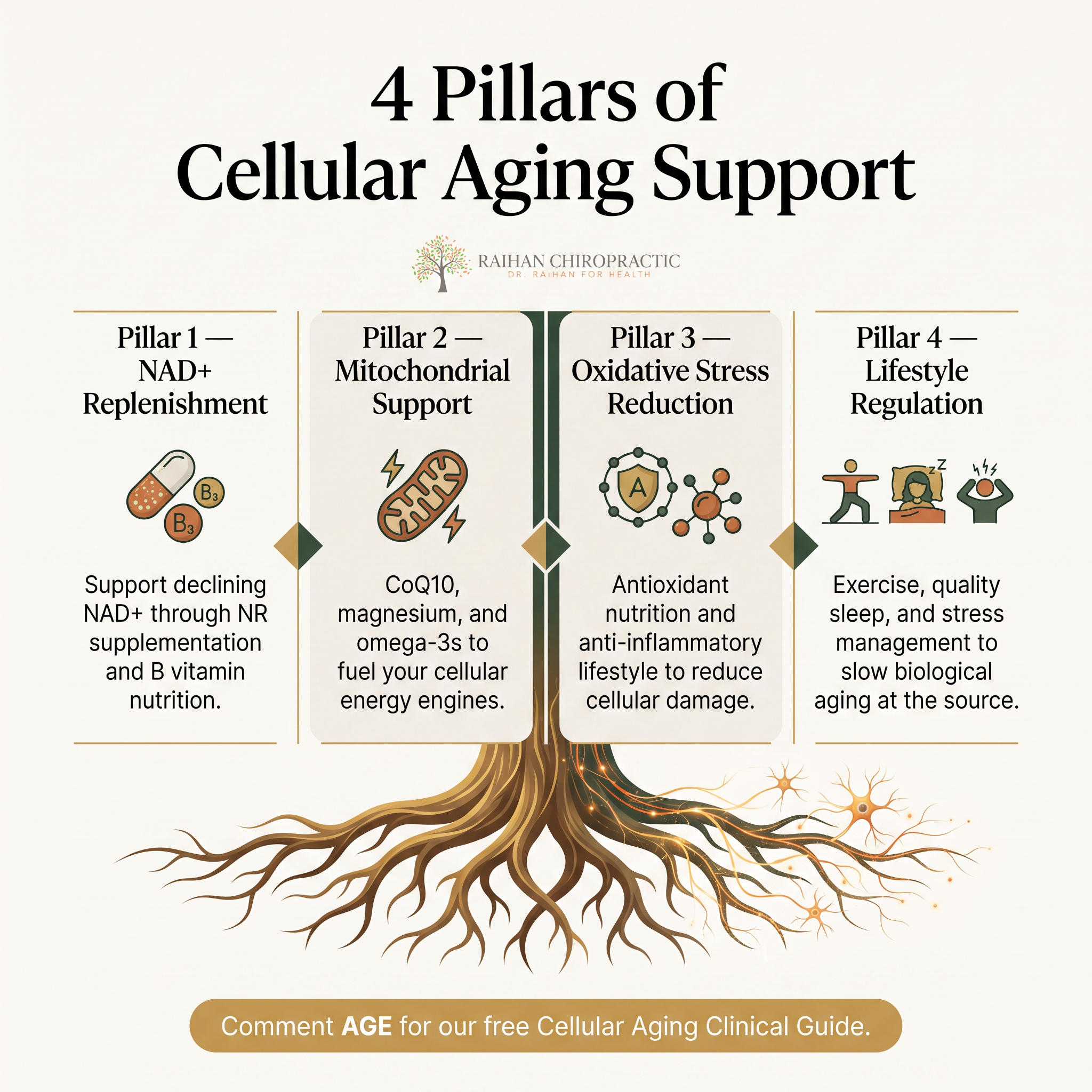
The Cellular Aging Clinical Guide
The Cellular Aging Clinical Guide
By Raihan Chiropractic | Dr. Raihan For Health
Disclaimer: This guide is intended for educational and informational purposes only. It does not constitute medical advice, diagnosis, or treatment. The information presented here is not a substitute for professional medical advice. Always consult your physician or qualified healthcare provider before making any changes to your health regimen, starting new supplements, or addressing any medical concerns.
What Is NAD+?
NAD+ is a molecule found in every cell. It helps cells turn food into energy and plays a role in many normal biological processes, including metabolism and cellular repair.
Researchers are interested in NAD+ because NAD-related pathways change with age and are involved in processes studied in metabolism, stress response, and cellular maintenance.
However, NAD+ is not a simple “energy level” that explains every symptom. Fatigue, poor concentration, low motivation, sleep trouble, and slower recovery can have many causes, including sleep disorders, anemia, thyroid conditions, depression, anxiety, medication effects, chronic illness, overtraining, inadequate calorie intake, and life stress.
NAD+ and Aging: What We Know
NAD+ metabolism may change with age. Researchers are studying whether raising NAD+ through vitamin B3-related compounds—such as nicotinamide riboside, or NR—could affect health-related processes.
Human studies show that oral NR can increase NAD-related metabolites in the blood and some tissues. In short-term studies, it has generally been well tolerated.nature+1
But increasing a blood biomarker is not the same as proving a health benefit.
So far, human studies have not established that NR:
- Slows or reverses aging
- Extends lifespan
- Treats fatigue or brain fog
- Restores mitochondrial function in otherwise healthy people
- Prevents disease
- Replaces exercise, sleep, nutritious eating, or appropriate medical care
Recent reviews find that NR may reliably show biological target engagement—meaning NAD-related markers increase—but results for meaningful health outcomes have been inconsistent or often absent.
Nicotinamide Riboside: Practical Perspective
NR is a form of vitamin B3 sold as a dietary supplement. It is being researched for possible roles in metabolic, muscle, neurological, and aging-related health.
If you are considering NR, keep these points in mind:
- It should not be marketed as an anti-aging treatment or cure.
- It is not necessary for healthy aging.
- “Clinical-grade” does not mean a supplement is proven to improve clinical outcomes.
- Long-term safety and long-term benefits for healthy people remain under study.
- Supplements can interact with medications or be inappropriate for some medical conditions.
- A product should not replace evaluation of ongoing symptoms.
A qualified clinician or pharmacist can help determine whether a supplement is appropriate for you.
Mitochondria and Energy
Mitochondria are structures within most cells that generate much of the ATP used for cellular energy. They are essential for normal body function.
Mitochondrial biology changes with age, illness, inactivity, and metabolic health. But phrases such as “mitochondrial dysfunction” are often used too broadly online.
Feeling tired, struggling with exercise, or having brain fog does not by itself mean you have mitochondrial dysfunction. These are common symptoms with many possible causes.
The most reliable ways to support energy and physical function are also the least glamorous:
- Regular aerobic activity that fits your health status
- Strength training to maintain muscle and bone health
- Adequate sleep
- Enough calories and protein for your needs
- A varied diet with fruits, vegetables, fiber-rich foods, and protein sources
- Avoiding tobacco and limiting alcohol
- Identifying and treating medical conditions that affect energy or function
Nutrients and Supplements
Nutrients are important because the body needs them to function normally—not because every person needs a long anti-aging supplement stack.
CoQ10
CoQ10 is involved in cellular energy processes. Some people taking statins or those with specific medical circumstances may discuss CoQ10 with a clinician. It has not been proven to reverse aging or reliably improve energy in healthy adults.
Magnesium
Magnesium is needed for many normal biological reactions. Food sources include nuts, seeds, beans, whole grains, and leafy greens. Supplements can cause diarrhea and may be unsafe for people with reduced kidney function or certain medication regimens.
B vitamins
B vitamins support normal metabolism and nervous-system function. Vitamin B12 and folate deficiency can cause important health problems, but supplementation should be based on diet, risk factors, symptoms, and appropriate testing when indicated.
Omega-3 fats
Fatty fish, nuts, and seeds can be part of a balanced eating pattern. Omega-3 supplements may be useful in certain circumstances, but they have not been proven to slow biological aging. Discuss them with a clinician if you take blood-thinning medication or have surgery planned.
Antioxidants
Vitamin C, vitamin E, and plant compounds in fruits, vegetables, tea, nuts, and other foods contribute to normal nutrition. Large-dose antioxidant supplements are not automatically beneficial and may be harmful in some settings.
Lifestyle Habits With Stronger Evidence
Move regularly
Regular physical activity supports heart health, muscle strength, balance, insulin sensitivity, mood, sleep, and physical function. A combination of aerobic movement and strength training is beneficial for many adults.
Start with what is realistic: walking, cycling, swimming, resistance bands, body-weight exercise, or a supervised program if you have health limitations.
Sleep consistently
Sleep supports memory, mood, immune function, recovery, and day-to-day energy. Most adults benefit from consistent, adequate sleep.
Seek help for loud snoring, breathing pauses, frequent waking, insomnia, or excessive daytime sleepiness. These can be signs of treatable sleep disorders.
Eat a varied, sustainable diet
Build meals around foods you enjoy and can maintain:
- Vegetables and fruits
- Beans, lentils, whole grains, nuts, and seeds
- Protein sources such as fish, eggs, poultry, dairy, tofu, tempeh, or lean meats
- Unsaturated fats such as olive oil, avocado, nuts, seeds, and fish
- Water and other fluids based on thirst, activity, climate, and medical guidance
Rather than fearing individual ingredients, focus on eating fewer highly processed foods if they are replacing more nutritious options.
Manage stress and stay connected
Chronic stress can affect health through sleep disruption, behavior changes, mood, appetite, blood pressure, and social withdrawal. Helpful strategies can include movement, breathing exercises, time outdoors, counseling, prayer, mindfulness, meaningful relationships, and structured routines.
When to Seek Evaluation
Do not self-diagnose “low NAD+” or mitochondrial dysfunction based on nonspecific symptoms.
Speak with a qualified healthcare professional if you experience:
- Persistent fatigue or decreased exercise tolerance
- New or worsening brain fog, memory changes, or confusion
- Unexplained weight changes
- Sleep problems that persist
- New weakness, numbness, balance problems, or frequent falls
- Depression, anxiety, loss of interest, or major mood changes
- Palpitations, chest pain, fainting, or shortness of breath
- Digestive symptoms or medication side effects
A clinician can help assess possible contributors, including sleep disorders, anemia, thyroid disease, nutritional deficiencies, medication effects, mood disorders, diabetes, cardiovascular conditions, and other treatable concerns.
The Bottom Line
Healthy aging is not built on one molecule or one supplement.
NR is an interesting research area: it can raise NAD-related biomarkers in humans, but its long-term clinical benefits for healthy aging remain unproven.pubmed.ncbi.nlm.nih+1
The stronger foundation is consistent movement, sufficient sleep, nutritious eating, social connection, avoidance of tobacco, appropriate alcohol use, preventive care, and timely evaluation of new or persistent symptoms.
You cannot stop time, but you can make evidence-informed choices that support your health, strength, independence, and quality of life.
For lifestyle-focused support, contact Raihan Chiropractic | Dr. Raihan For Health. Persistent or concerning symptoms should be evaluated by an appropriately qualified medical or mental-health professional.
DM us on Instagram, visit drraihan.com, or call (949) 582-9090.
References
Abdellatif, M., et al. (2021). NAD+ metabolism and its roles in cellular processes during ageing. Circulation, 143(14), 1408–1428..
Martens, C. R., et al. (2018). Chronic nicotinamide riboside supplementation is well tolerated and elevates NAD+ in healthy middle-aged and older adults. Nature Communications, 9, 1286.nature
Elhassan, Y. S., et al. (2021). Nicotinamide riboside augments the aged human skeletal muscle NAD+ metabolome and induces transcriptomic and anti-inflammatory signatures. Cell Reports Medicine, 2(3), 100271.
Dollerup, O. L., et al. (2023). What is really known about the effects of nicotinamide riboside supplementation in humans? Science Advances. Human trials show few consistent clinically meaningful effects.science
NAD+ supplementation for anti-aging and wellness (2025). Evidence review finding clear NAD-related biomarker changes but inconclusive clinical effectiveness for anti-aging and wellness outcomes.pubmed.ncbi.nlm.nih

Leave a Reply