
The Healthy Fats and Inflammation Guide
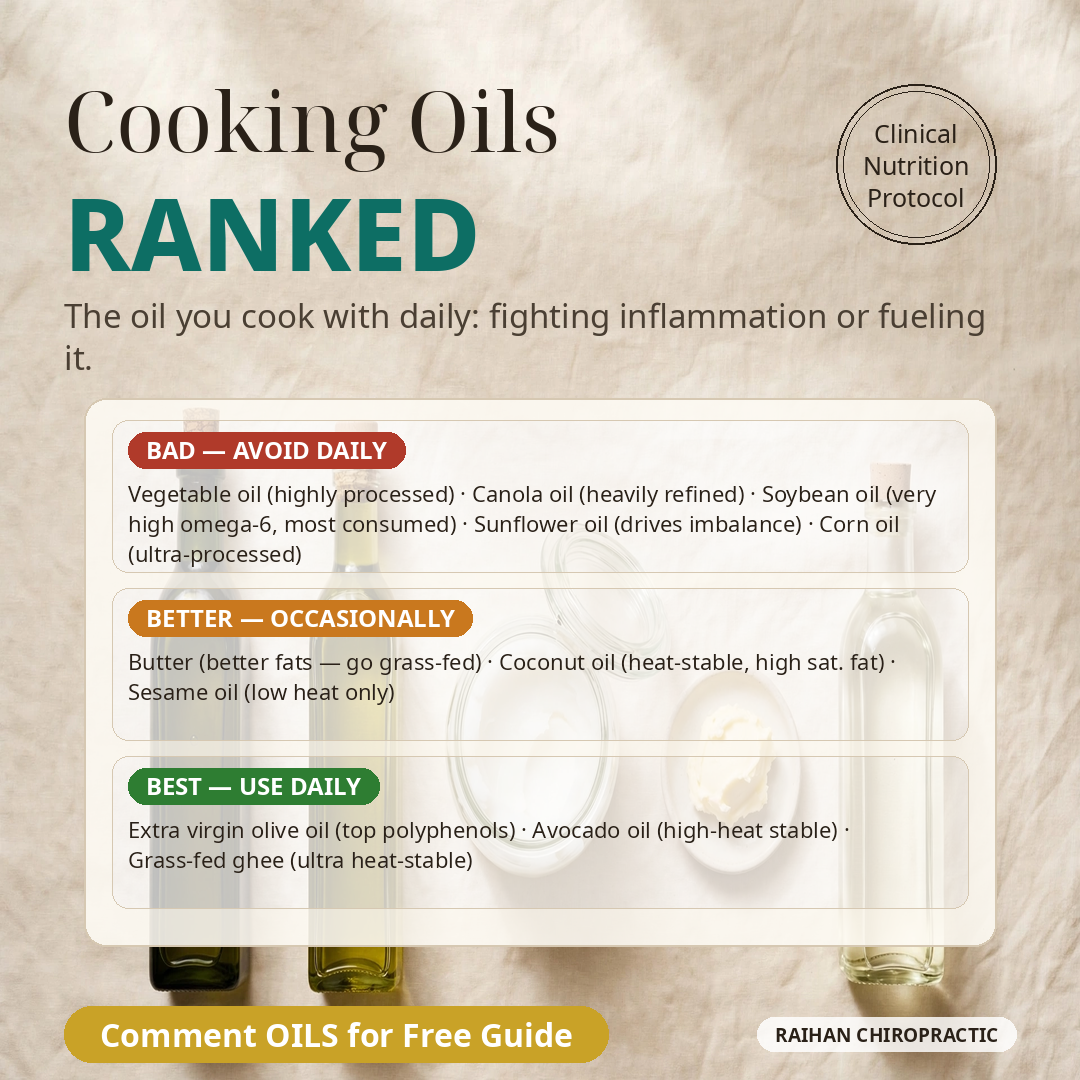
The oil you cook with is either calming inflammation or fueling it.
By Raihan Chiropractic | Dr. Raihan For Health
This guide is for educational purposes only. It is not medical advice, diagnosis, or treatment. Talk to your physician before changing your diet, supplements, or health routine.
Why Your Cooking Oil Matters
You might buy organic produce and lean protein — then cook it all in an oil that works against you.
Chronic, low-grade inflammation drives joint pain, brain fog, fatigue, skin issues, mood problems, and digestive trouble. The oil you use every day is one of the biggest levers on that inflammation — and one of the easiest to change.
Do You Recognize These?
Chronic inflammation often shows up as:
- Joint pain or stiffness that never fully goes away
- Brain fog or mental sluggishness
- Fatigue that rest doesn’t fix
- Acne, eczema, or psoriasis
- Bloating or digestive discomfort after meals
- Mood swings or anxiety without a clear cause
- Slow recovery from exercise or injury
- Frequent headaches
Three or more? Your daily inflammatory load — including what you cook with — deserves a serious look.
The Omega-6 Problem — In 30 Seconds
Your body needs both omega-6 and omega-3 fats. The problem is the ratio.
| Era | Omega-6 : Omega-3 |
|---|---|
| Our ancestors | ~1 : 1 |
| Recommended target | ~4 : 1 or lower |
| Average American today | ~20 : 1 (some reach 30 : 1) |
Seed oils — vegetable, canola, soybean, sunflower, corn, cottonseed — are extremely high in omega-6. They’re in nearly every packaged food, fast food, and restaurant meal, which is why the modern ratio is so lopsided.
In excess, omega-6 fats feed the production of inflammatory molecules (prostaglandins, leukotrienes). Omega-3s do the opposite — they help resolve inflammation. When the ratio is 20:1, your body sits in a constant state of low-grade inflammation that quietly damages blood vessels, gut lining, brain cells, and joints.
Why Seed Oils Are Especially Problematic
They’re unstable under heat. Seed oils are high in polyunsaturated fats, which oxidize rapidly when heated — producing harmful compounds (aldehydes, lipid peroxides) that damage cells. Frying or searing in them adds an oxidative burden to every meal.
They’re industrially extracted. Most aren’t cold-pressed. They’re pulled from seeds with chemical solvents like hexane, then bleached and deodorized. The result bears little resemblance to a whole food.
They’re hidden everywhere. Crackers, bread, chips, sauces, dressings, protein bars, plant-based meats, restaurant food — even when you stop cooking with them at home, they find you.
They crowd out omega-3s. Omega-6 and omega-3 compete for the same enzymes. A very high omega-6 intake may blunt the benefit of the omega-3s you eat — or the fish oil you supplement.
What to Cook With — And When
Match the oil to the heat. The wrong oil at high heat destroys its benefits.
BEST — use daily
Extra virgin olive oil — the most researched cooking oil there is. Rich in oleocanthal, a polyphenol shown to have ibuprofen-like anti-inflammatory activity in lab studies, plus antioxidants that protect blood vessels and brain cells. Best for low–medium heat (up to ~375°F), dressings, and finishing.
Buy it right: dark glass bottle, harvest date on the label, peppery or slightly bitter taste = high polyphenols.
Avocado oil — the most heat-stable pick, with a smoke point around 480°F. Ideal for searing, roasting, and grilling. Mild, neutral flavor.
Grass-fed ghee — clarified butter (milk proteins removed), extremely stable at high heat. Contains butyrate, which supports gut lining integrity. Excellent for sautéing and high-heat cooking.
FINE OCCASIONALLY
- Grass-fed butter — better than seed oils; best for low–medium heat or finishing
- Virgin coconut oil — stable at medium heat; fine in moderation
- Sesame oil — best as a low-heat or finishing oil
NEVER HEAT THESE
Vegetable oil · canola oil · soybean oil · sunflower oil · corn oil · cottonseed oil · anything labeled “vegetable blend” or just “cooking oil”
Label Reading — Where Seed Oils Hide
Scan ingredient lists for: soybean oil · canola oil · vegetable oil · sunflower oil · safflower oil · corn oil · cottonseed oil · partially hydrogenated oils · “blend of oils” with no specifics
They’re usually in: crackers, chips, snack foods · commercial dressings and sauces · bread and baked goods · plant-based meat alternatives · protein and granola bars · most restaurant food (including salads) · margarine and butter alternatives · nut butters that aren’t 100% nuts
Healthy Fats to Eat More Of
Cutting inflammatory oils is half the job. Adding anti-inflammatory fats completes it.
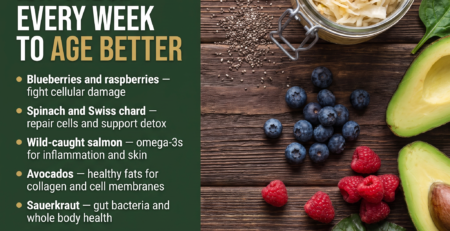
- Omega-3s (EPA & DHA): wild salmon, sardines, mackerel, anchovies — 2–3 servings of fatty fish per week. A quality fish oil (triglyceride form) can add support.
- Monounsaturated fats: extra virgin olive oil, avocados, almonds, macadamia nuts.
- MCTs: coconut oil, grass-fed dairy — quickly converted to energy.
- Whole-food saturated fats (grass-fed beef, eggs, pasture-raised dairy): the science here is more nuanced than older guidelines suggested — most experts still recommend keeping them moderate as part of an overall whole-food diet low in seed oils and refined carbs.
Start Today — Simple Swaps
Right now:
- Cook with extra virgin olive oil or avocado oil instead of seed oils
- Swap butter-alternative spreads for grass-fed butter or ghee
- Make dressing from olive oil + lemon + sea salt
This week:
- Eat fatty fish 2–3 times
- Add half an avocado to one meal a day
- Grab a small handful of walnuts, almonds, or macadamia nuts daily
- Read every packaged-food label — skip anything with seed oils
Eating out:
- Ask for olive oil and vinegar instead of dressing
- Choose grilled over fried
- Skip deep-fried foods — they’re almost always cooked in seed oils at high heat
Is This You?
A root-cause inflammation consultation may help if you deal with chronic joint pain, brain fog, unrelenting fatigue, skin conditions, digestive inflammation, mood instability, slow recovery, or cardiovascular risk factors.
Ready to address the root cause?
DM us on Instagram · www.drraihan.com · (949) 582-9090
What you cook with every day is either working for you or against you.
Raihan Chiropractic | Dr. Raihan For Health
Your health. Your root cause. Your results.
References
- Simopoulos AP. (2002). The importance of the ratio of omega-6 to omega-3 essential fatty acids. Biomedicine & Pharmacotherapy, 56(8).
- Simopoulos AP. (2008). The omega-6 to omega-3 fatty acid ratio. Experimental Biology and Medicine, 233(6).
- Calder PC. (2010). Omega-3 fatty acids and inflammatory processes. Nutrients, 2(3).
- DiNicolantonio JJ & O’Keefe JH. (2018). Omega-6 vegetable oils as a driver of coronary heart disease. Open Heart, 5(2).
- Beauchamp GK, et al. (2005). Ibuprofen-like activity in extra-virgin olive oil. Nature, 437.
- Kiecolt-Glaser JK, et al. (2011). Omega-3 supplementation lowers inflammation. Brain, Behavior, and Immunity, 26(6).
- Gómez-Pinilla F. (2008). Brain foods: the effects of nutrients on brain function. Nature Reviews Neuroscience, 9(7).




Leave a Reply