
The Hormone Balance Guide
Your hormones are talking. Here’s how to listen.
By Raihan Chiropractic | Dr. Raihan For Health
This guide is for educational purposes only. It does not constitute medical advice, diagnosis, or treatment. Talk to your physician before changing your diet, supplements, or health routine. Individual results vary.
Does Any of This Sound Like You?
Hormones work as a network — when one shifts, others compensate. That’s why imbalance shows up as a cluster of seemingly unrelated symptoms.
Energy & metabolism
- Exhausted even after a full night’s sleep
- Afternoon crashes coffee can’t fix
- Stubborn belly/hip/thigh weight; always cold hands and feet
Mood & brain
- Mood swings out of proportion to what’s happening
- Anxiety, dread, irritability, or brain fog
- Low mood that comes and goes
Sleep & recovery
- Trouble falling or staying asleep; waking 2–4am regularly
- Never fully rested; slow recovery from exercise or illness
Body
- Hair thinning or loss; hormone-related bloating
- Skin changes — acne, dryness, new sensitivities
- Frequent headaches or migraines
Reproductive
- Irregular, heavy, or painful periods; breast tenderness; low libido
For men
- Muscle loss despite training; growing belly fat
- Low drive, low motivation, mood flattening
Three or more categories? Your hormones may be the root thread.
The 6 Hormones That Run the Show
CORTISOL — the stress hormone
Helpful in short bursts; destructive when chronically high. Elevated cortisol suppresses or disrupts thyroid conversion, progesterone, testosterone, and insulin sensitivity.
Signs: belly fat, anxiety, poor sleep, sugar cravings, “wired but tired,” frequent illness.
THYROID (T3/T4) — the metabolic dial
Sets your metabolic rate, body temperature, energy, and gut motility. Note: standard TSH testing alone can miss the full picture — it doesn’t show active T3 or thyroid antibodies. A comprehensive panel tells more.
Signs of low function: weight gain, fatigue, cold intolerance, hair thinning, constipation, brain fog, dry skin.
ESTROGEN & PROGESTERONE — the balance pair
Regulate cycle, fertility, mood, bone, and cardiovascular health. When estrogen runs high relative to progesterone (“estrogen dominance”) — driven by environmental estrogens, gut dysfunction, sluggish liver clearance, and stress depleting progesterone — symptoms follow.
Signs: bloating, breast tenderness, heavy/irregular periods, mood swings, hip/thigh weight gain, migraines.
TESTOSTERONE — the drive hormone
Essential for men and women: libido, muscle, bone, motivation, mental sharpness. Declines with age, but stress, poor sleep, obesity, and toxin exposure accelerate it.
Signs (men): fatigue, muscle loss, belly fat, low libido. Signs (women): low libido, flat motivation, hard to build muscle.
INSULIN — the blood sugar hormone
Repeated sugar spikes → insulin resistance → disrupted sex hormones (higher androgens in women, lower testosterone in men), stressed cortisol rhythm, impaired thyroid, and visceral belly fat that further fuels imbalance.
Signs: belly fat, post-meal crashes, intense sugar cravings, fatigue after eating.
What’s Disrupting Them
- Chronic stress — the #1 disruptor. No hormone problem exists separately from a stress problem.
- Poor sleep — growth hormone, testosterone, and cortisol rhythm all depend on it. Even a few bad nights measurably shift the system.
- Blood sugar swings — every big spike drives insulin, cortisol, and fat storage.
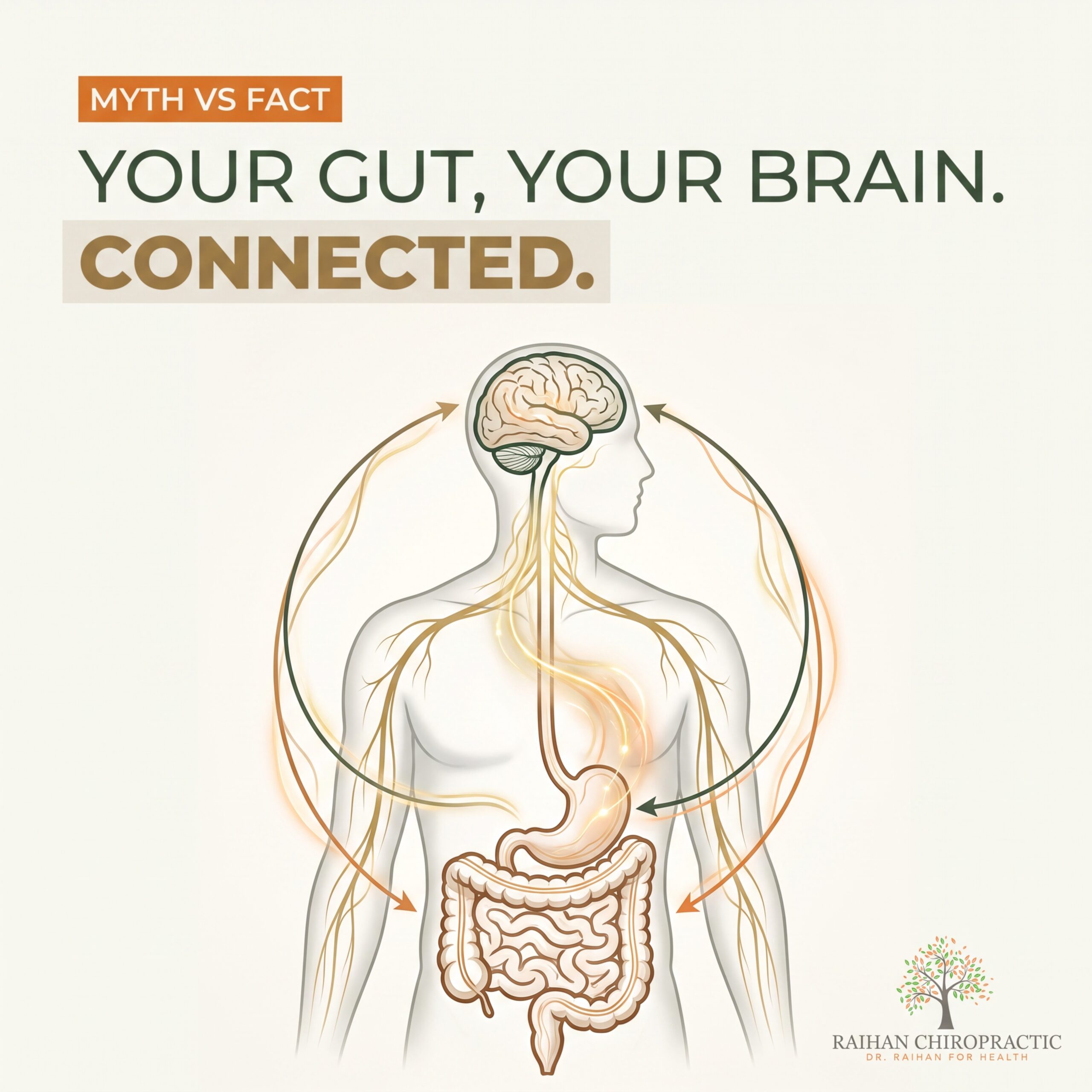
- Gut dysfunction — gut bacteria (the “estrobolome”) help clear excess estrogen; dysbiosis impairs that clearance.
- Nutrient gaps — hormones are built from nutrients (see table below).
- Environmental estrogens — plastics, pesticides, fragrances, non-stick cookware, thermal receipts mimic estrogen. Swap to glass/stainless, filter water, choose cleaner personal care.
- Exercise extremes — overtraining without recovery spikes cortisol and suppresses sex hormones; sitting all day drives insulin resistance.
Eat for Hormone Balance
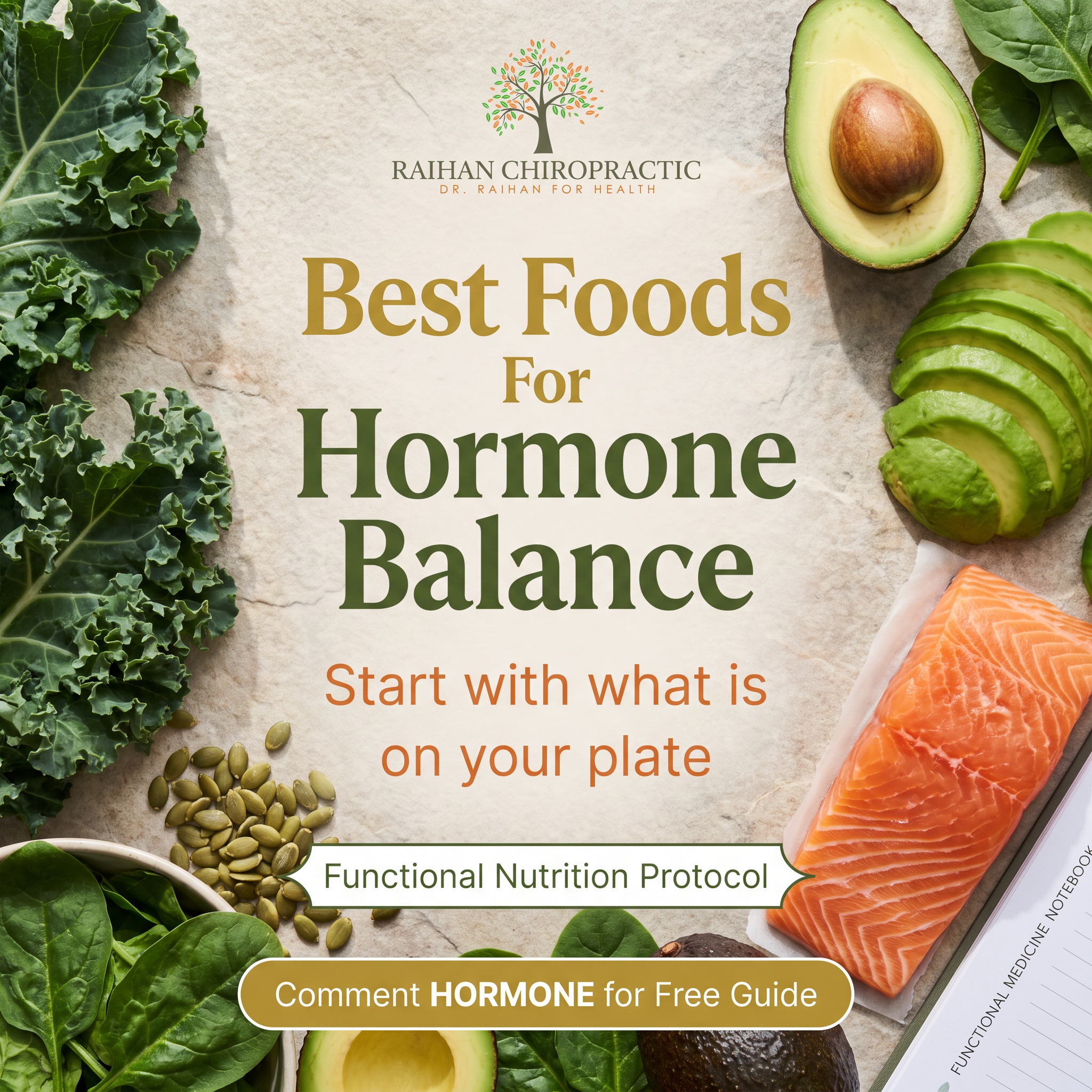
- Cruciferous vegetables (broccoli, kale, Brussels sprouts) — compounds that support healthy estrogen metabolism via the liver
- Fatty fish (salmon, sardines, mackerel) 2–3x/week — omega-3s, vitamin D, protein
- Eggs — cholesterol (the raw material for steroid hormones), choline, B vitamins, vitamin D
- Avocado — healthy fats are essential; very-low-fat diets can impair hormone production
- Pumpkin seeds — zinc + magnesium for testosterone, progesterone, and cortisol regulation
- Leafy greens — magnesium and folate
- Ground flaxseed — lignans that support estrogen elimination
- Fermented foods (yogurt, kefir, sauerkraut) — gut diversity for hormone clearance
- Lentils & beans — fiber for hormone elimination, B vitamins, iron
Key Nutrients
| Nutrient | Why it matters | Best sources |
|---|---|---|
| Magnesium | Cortisol regulation, thyroid, insulin sensitivity, progesterone (~50% of Americans fall short) | Leafy greens, pumpkin seeds, almonds, dark chocolate |
| Zinc | Testosterone & progesterone synthesis, thyroid conversion | Oysters, beef, pumpkin seeds, eggs |
| Vitamin D | Acts like a hormone; regulates sex hormones, thyroid, immunity | Sun, salmon, sardines, egg yolks |
| B6, B12, Folate | Liver detox of hormones; B6 supports progesterone and serotonin pathways | Meat, eggs, leafy greens, lentils |
| Omega-3s (EPA/DHA) | Calm inflammation that disrupts hormone signaling | Fatty fish, fish oil |
| Iodine + Selenium | Required to make and activate thyroid hormone | Seaweed, fish, Brazil nuts (1–2/day), eggs |
Adaptogenic herbs: ashwagandha has the strongest evidence — RCTs show reduced cortisol and better stress resilience, with early evidence for testosterone and thyroid support. Rhodiola is studied for stress-related fatigue. Discuss any herb with your provider first.
Daily Habits Checklist
- [ ] Sleep 7–9 hours, same schedule even on weekends
- [ ] Protein at every meal — steadies blood sugar and insulin
- [ ] Strength train 3–4x/week — the single best exercise lever for hormones
- [ ] Manage stress daily — breathing, nature, real downtime (a clinical intervention, not a luxury)
- [ ] 30 different plant foods/week + fermented food daily (gut = hormone clearance)
- [ ] Cut the big xenoestrogen sources — plastic food storage, synthetic fragrances, non-stick overuse
Is This You?
A root-cause hormone consultation may help with: unexplained fatigue, stubborn belly weight, mood instability, poor sleep, hair thinning, irregular/painful periods, low libido, brain fog, cold intolerance — especially when standard blood tests come back “normal.”
Ready to address the root cause?
DM us on Instagram · www.drraihan.com · (949) 582-9090
Your hormones aren’t your enemy. They’re trying to tell you something. We help you listen.
Raihan Chiropractic | Dr. Raihan For Health
Your health. Your hormones. Your results.
References
- Boyle NB, et al. (2017). Magnesium supplementation and subjective anxiety/stress. Nutrients, 9(5).
- Calder PC. (2010). Omega-3 fatty acids and inflammatory processes. Nutrients, 2(3).
- Prasad AS. (2013). Discovery of human zinc deficiency. Advances in Nutrition, 4(2).
- Helmreich DL, et al. (2005). HPA–thyroid axis interaction during chronic stress. Stress, 8(2).
- Jarrett DB, et al. (1983). Cortisol-induced suppression of plasma testosterone. JCEM, 43(3).
- Mnif MF, et al. (2011). Endocrine disruptor pesticides and human health. IJERPH, 8(6).
- Chandrasekhar K, et al. (2012). Ashwagandha in stress and anxiety. Indian J Psychol Med, 34(3).
- Sonnenburg JL & Bäckhed F. (2016). Diet-microbiota interactions. Nature, 535(7610).

Leave a Reply