
The Protein and Brain Chemistry Guide
Your mood is built from food — one meal at a time.
By Raihan Chiropractic | Dr. Raihan For Health
This guide is for educational purposes only. It is not medical advice, diagnosis, or treatment. Talk to your physician before changing your diet, supplements, or health routine. Individual results vary.
Why This Guide Exists
Low motivation. Anxiety. Brain fog. Most people blame stress, age, or genetics — and never look at their plate.
Your brain builds its mood chemicals from amino acids — the building blocks in protein — plus a handful of helper vitamins and minerals. This guide shows you how to supply all of it.
Do These Sound Familiar?
Low drive
- Hard to start tasks, even ones you want to do
- Feeling flat or numb for no clear reason
- Running on caffeine or sugar to get through the day
Anxiety & low mood
- Worry or dread without a clear cause
- Irritable over small things, can’t fully relax
- Low mood that won’t lift
Brain fog
- Can’t concentrate or finish tasks
- Losing words mid-sentence, poor short-term memory
- Simple tasks feel overwhelming
Possible low-protein signs
- Constant sugar/carb cravings, hungry again soon after eating
- Hair thinning, slow nail growth
- Slow recovery, frequent illness, poor sleep
These symptoms have many possible causes — but if you checked several, your protein intake and brain chemistry are worth examining.
Your Brain’s 4 Chemicals — And What Builds Them
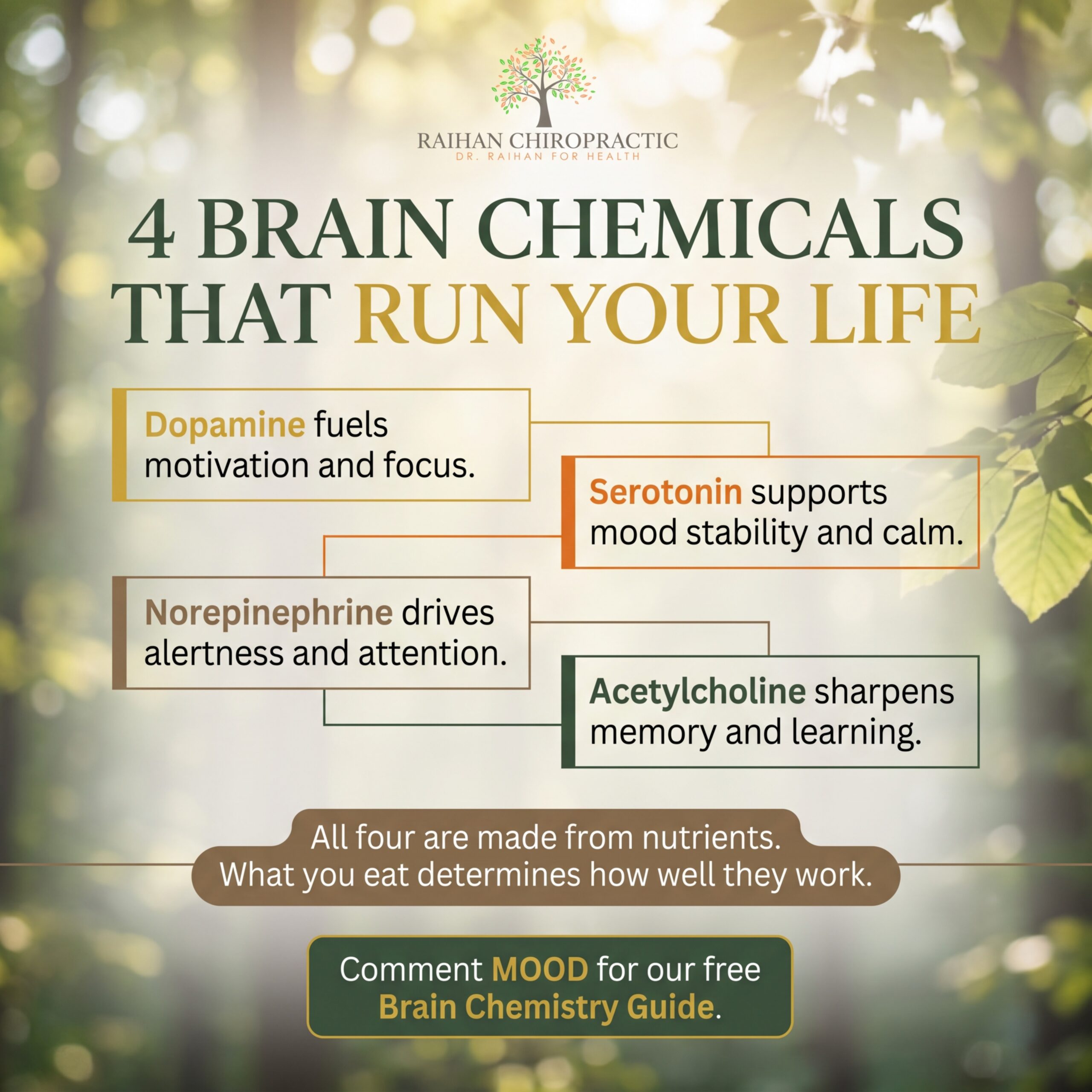
DOPAMINE — motivation & focus
Feeling: driven, capable, engaged. Low: flat, unmotivated, stimulation-dependent.
Built from: tyrosine → chicken, turkey, eggs, fish, avocado, almonds.
SEROTONIN — calm & stability
Feeling: grounded, resilient, sleeping well. Low: anxious, irritable, poor sleep.
Built from: tryptophan → turkey, salmon, eggs, pumpkin seeds, oats, walnuts.
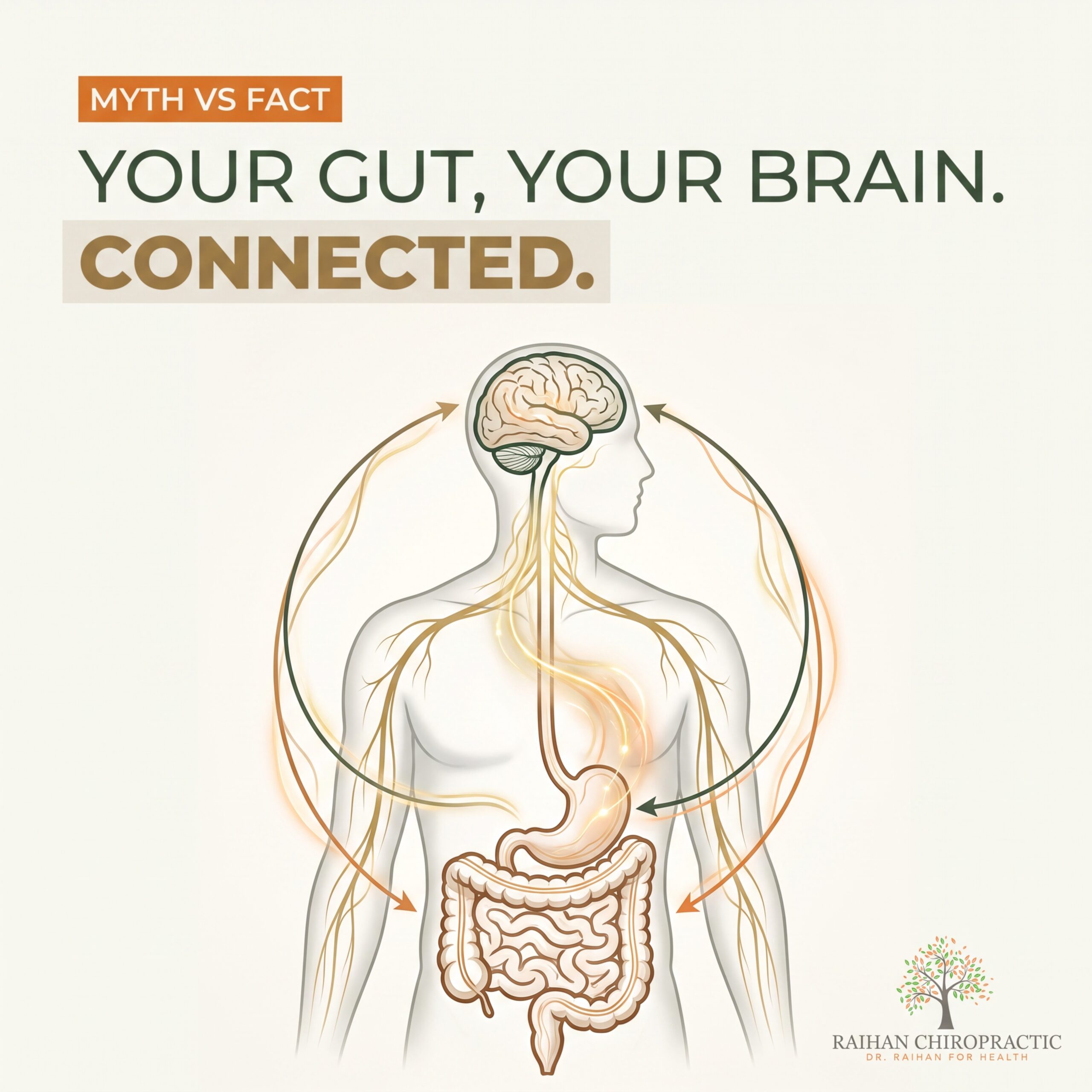
About 90% of your body’s serotonin is made in the gut — another reason gut health matters.
NOREPINEPHRINE — alertness
Feeling: sharp, mentally responsive. Low: sluggish, scattered, unfocused.
Built from: dopamine → norepinephrine, so the same tyrosine-rich foods cover it.
ACETYLCHOLINE — memory & learning
Feeling: clear thinking, easy recall. Low: brain fog, slow word-finding.
Built from: choline → eggs (the best source), beef liver, salmon, sunflower seeds. Many people — especially on plant-heavy diets — fall short on choline without realizing it.
The Helper Nutrients (Don’t Skip These)
Protein supplies the raw materials. These nutrients are the tools that convert them:
| Nutrient | What it does | Best foods |
|---|---|---|
| Vitamin B6 | Converts tryptophan → serotonin, tyrosine → dopamine | Salmon, chicken, bananas, potatoes, spinach |
| Vitamin B12 | Nerve function, neurotransmitter production | Eggs, dairy, meat, fish, shellfish |
| Folate | Works with B12 in mood pathways | Leafy greens, lentils, beans, avocado |
| Magnesium | Supports serotonin/dopamine pathways, stress resilience | Dark chocolate, almonds, spinach, pumpkin seeds |
| Iron | Cofactor for making serotonin and dopamine | Red meat, shellfish, spinach, lentils |
| Vitamin C | Converts dopamine → norepinephrine | Bell peppers, citrus, strawberries, kiwi |
| Omega-3s | Keep brain cell membranes flexible so signals bind properly | Salmon, sardines, walnuts, chia, flaxseed |
Missing any of these creates a bottleneck — even when protein intake is fine.
Best Protein Sources by Goal
For dopamine & alertness (tyrosine-rich)
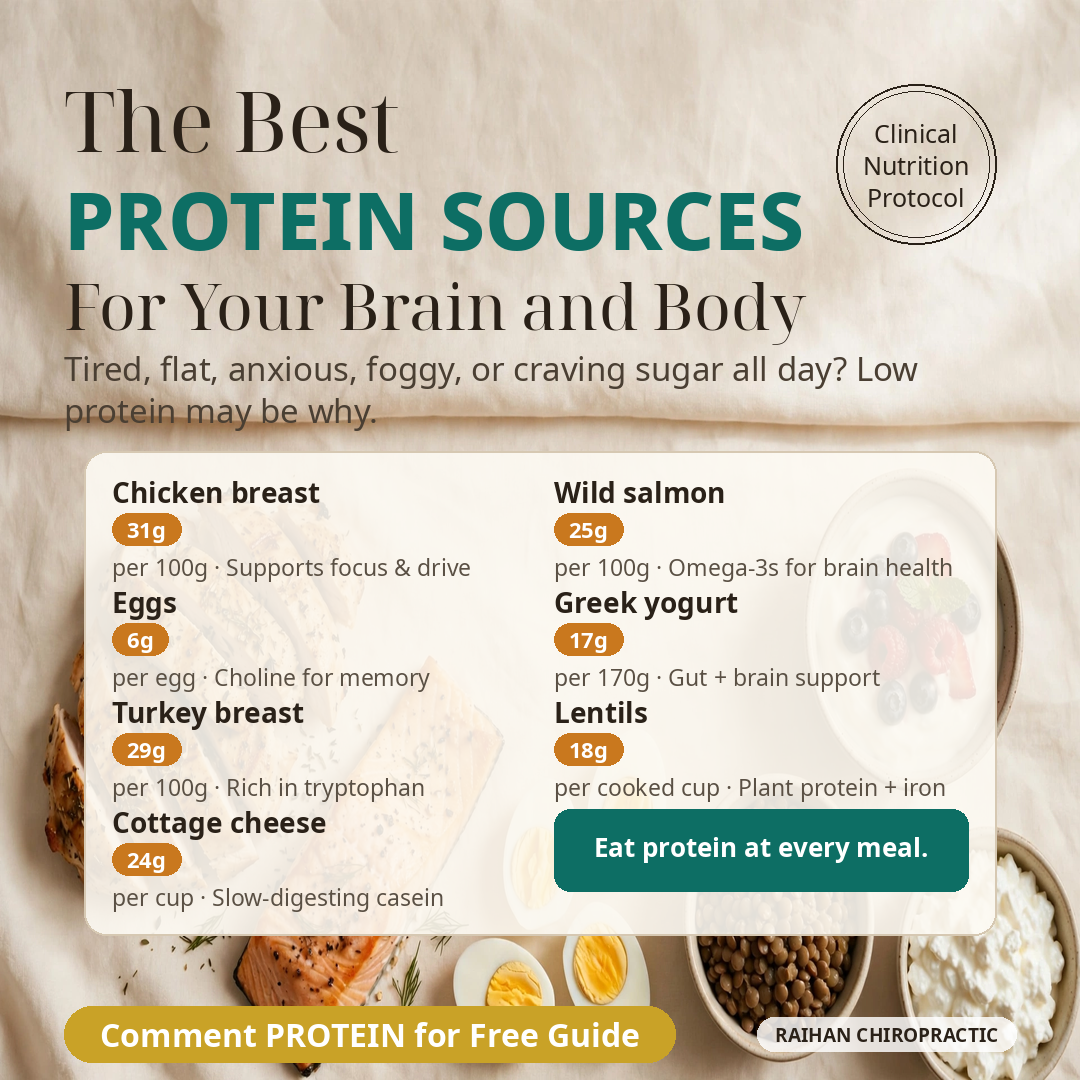
- Chicken breast — 31g per 100g
- Turkey breast — 29g per 100g (also has tryptophan)
- Eggs — ~6g each, plus B vitamins and choline
- Lean beef — 26g per 100g, plus iron and zinc
- Almonds — tyrosine + magnesium
For serotonin & calm (tryptophan-rich)
- Turkey, salmon, eggs, pumpkin seeds, oats, walnuts
- (Turkey is a good source — but not uniquely “the richest.” Variety beats any single food.)
For memory (choline-rich)
- Eggs — the single best source
- Beef liver, salmon, sunflower seeds
All-rounders
- Greek yogurt — 17g per 170g · Cottage cheese — 24g per cup
- Lentils — 18g per cooked cup · Sardines — protein + omega-3s + vitamin D
Timing Matters
Your body doesn’t store amino acids the way it stores fat — your brain needs a steady supply.
- Morning: a carb-only (or skipped) breakfast leaves your brain without building blocks for hours. Start with eggs, Greek yogurt, cottage cheese, or smoked salmon.
- Midday: a protein-centered lunch sustains focus and steadies blood sugar — the “3pm crash” is often a protein/blood-sugar problem as much as a sleep problem.
- Evening: dinner protein supplies tryptophan for overnight serotonin and melatonin. Turkey, salmon, eggs, cottage cheese.
- After exercise: protein within a couple of hours supports recovery — but total daily intake matters more than any “30-minute window.”
What Undermines Brain Chemistry
- Refined sugar & ultra-processed food — spike reward pathways then crash; crowd out B-vitamin-rich foods your brain needs
- Processed seed oils — very high omega-6 intake is linked to inflammatory pathways that can impair brain cell signaling
- Skipping meals — hours without amino acids = sluggish neurotransmitter production, afternoon crashes, irritability
- Alcohol — can disrupt serotonin and deplete magnesium overnight (the classic next-day anxiety)
- Chronic stress — disrupts dopamine and serotonin signaling faster than diet alone can offset
- Poor sleep — sleep is critical for healthy neurotransmitter regulation; deprivation raises cortisol and wrecks next-day mood
- Sitting all day — even a 20-minute walk measurably supports dopamine, serotonin, and norepinephrine
Your Daily Checklist
Food
- [ ] A complete protein source at every meal
- [ ] Turkey, salmon, or eggs at least once today
- [ ] Leafy greens (folate + magnesium)
- [ ] Fatty fish 2–3x this week (omega-3s)
- [ ] Minimal refined sugar, seed oils, ultra-processed food
Lifestyle
- [ ] Move 20+ minutes
- [ ] 7–9 hours of sleep
- [ ] 10 minutes of real stress relief (breathing, walking)
- [ ] A protein-rich breakfast
Gut support
- [ ] Fiber-rich foods + something fermented (yogurt, kefir, sauerkraut)
- [ ] Plenty of water — even mild dehydration impairs mood and focus
Is This You?
Consider a root-cause consultation if you regularly deal with low motivation, anxiety or low mood without clear cause, brain fog, constant cravings or energy crashes, poor sleep, slow recovery — or just feel like a less capable version of yourself.
Ready to get to the root cause?
DM us on Instagram · www.drraihan.com · (949) 582-9090
Your brain chemistry isn’t fixed. It’s built — one meal at a time.
Raihan Chiropractic | Dr. Raihan For Health
Your health. Your root cause. Your results.

Leave a Reply